Understanding the Gut Microbiome
Your digestive system is home to a large and diverse community of microorganisms. Together, these microorganisms form what is commonly known as the gut microbiome.
The microbiome has become an important topic in nutrition and wellness, yet it can still feel complicated. At its core, the idea is simple: the digestive tract is an active environment where microorganisms interact with food, nutrients, and the body every day.
Understanding this environment can make it easier to see why diet and daily habits often matter when building a digestive wellness routine.
What Is the Gut Microbiome?
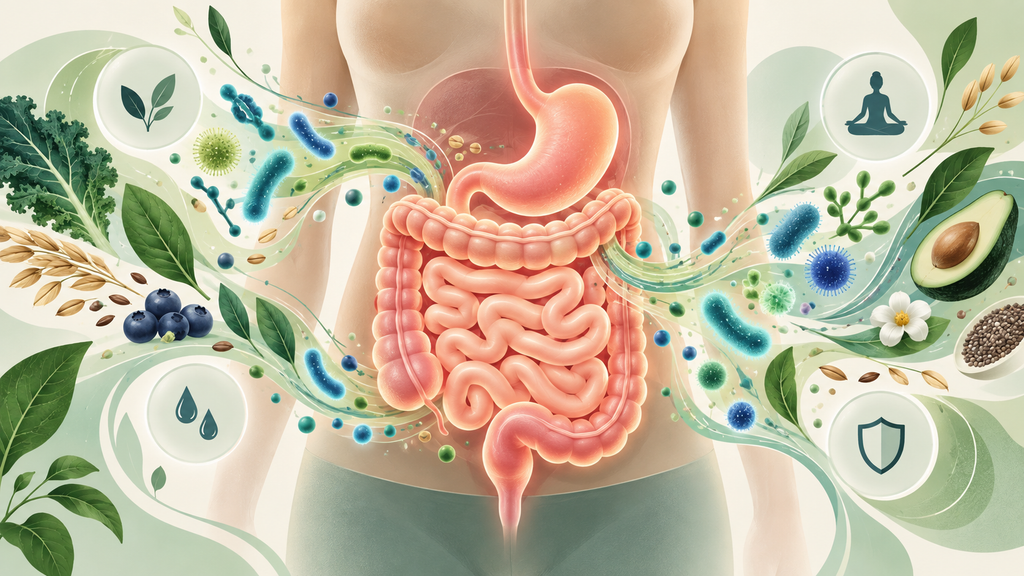
The gut microbiome refers to the community of microorganisms that live throughout the digestive tract.
Many of these microorganisms are bacteria, although the microbiome also includes other microscopic organisms. Each person has a different microbial community, and its composition can shift over time.
The microbiome is influenced by many parts of everyday life. Diet is one major factor, while age, lifestyle, environment, and certain medications can also shape the microbial community.
This is one reason there is no single “perfect” microbiome that looks exactly the same for everyone.
Why Does the Gut Microbiome Matter?
The digestive tract does much more than process food.
Microorganisms in the gut participate in the breakdown and metabolism of certain dietary components. They also interact closely with the environment of the digestive system.
For example, some gut bacteria help ferment types of dietary fiber that the human body cannot fully digest on its own. This process produces compounds that become part of the broader digestive environment.
Researchers continue to study how the microbiome interacts with different systems throughout the body. For everyday wellness, the most useful takeaway is simpler: the gut is an ecosystem, and daily habits can influence that ecosystem.
What the gut microbiome does
- Digestion and nutrient absorption: Certain bacteria break down complex fibers and produce short-chain fatty acids (such as butyrate) that nourish intestinal cells and support barrier function.
- Immune system training: Approximately 70% of the body’s immune cells reside in the gut. Early microbial exposure helps the immune system distinguish friend from foe and maintain tolerance.
- Metabolic regulation: The microbiome affects how we extract energy from food, influences fat storage, and participates in the production of vitamins (e.g., vitamin K and certain B vitamins).
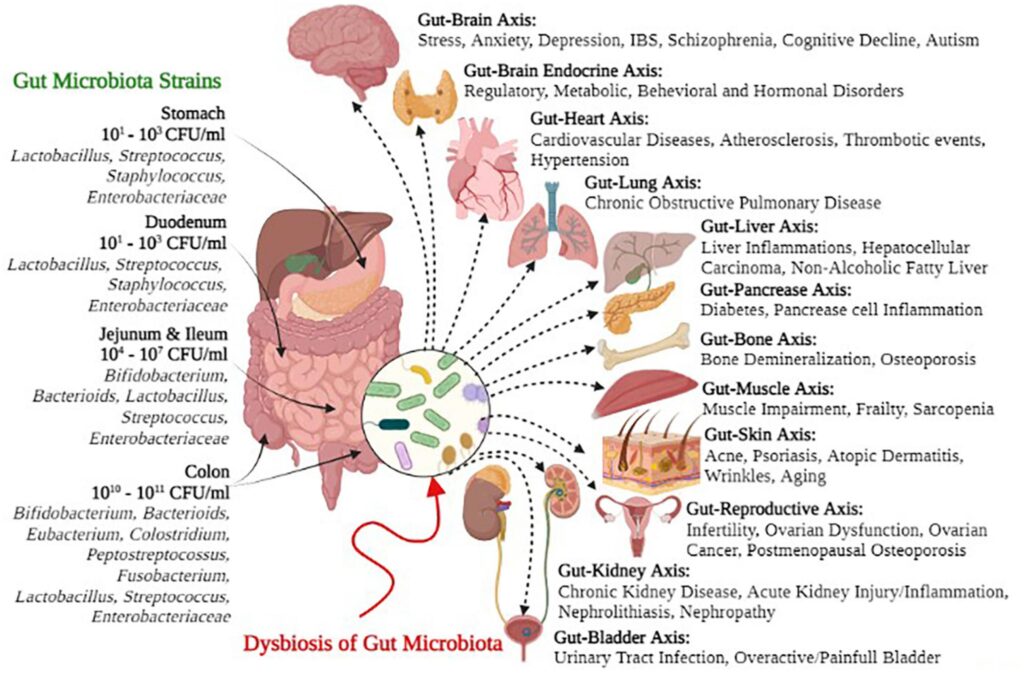
- Gut–brain axis: Microbial metabolites and signaling molecules communicate with the central nervous system, linking gut health to mood, stress response, and cognitive function.
Dysbiosis of gut microbiome can cause a variety of health problems
What Can Shape the Gut Microbiome?
The microbiome is dynamic. It can change as routines, diet, environment, and other factors change.
Diet
What we eat provides nutrients for both the body and the microorganisms living in the digestive tract.
A varied diet containing different plant foods can provide a wider range of fibers and other compounds that reach the gut.
Instead of focusing on a single “gut-friendly” food, it can be more useful to look at the overall pattern of what you eat over time.
Daily Lifestyle
Daily routines can also play a role in digestive wellness.
Sleep patterns, physical activity, and regular eating habits all form part of the environment in which digestion takes place.
Small routines that are realistic enough to maintain often make more sense than constantly changing from one wellness trend to another.
Prebiotics and Probiotics: What Is the Difference?
The terms prebiotic and probiotic are often used together, but they describe different things.
Probiotics are live microorganisms that are consumed in adequate amounts in certain foods or supplements.
Prebiotics are substances used by microorganisms in the gut. Many prebiotic ingredients are specific types of dietary fiber.
They are connected concepts, but they are not interchangeable.
A product containing probiotics does not automatically contain prebiotics, and a fiber ingredient is not automatically considered a prebiotic.
Understanding the difference can make supplement labels easier to read.
Does Everyone Need a Probiotic Supplement?
A probiotic supplement is not automatically necessary for every person.
Digestive wellness starts with the bigger picture: diet, lifestyle, individual needs, and consistency. Supplements can be one part of a routine, but they do not replace a balanced diet.
Different probiotic products can also contain very different strains and amounts of microorganisms. This makes it useful to look beyond the word “probiotic” on the front of a label and check what the formula actually contains.
If you have a medical condition, take medications, or have questions about whether a supplement fits your needs, a qualified healthcare professional can provide individual guidance.
Building an Everyday Digestive Wellness Routine
Supporting digestive wellness does not need to become complicated.
A practical routine can start with a varied diet, adequate fluids, and habits that fit naturally into daily life.
Consistency matters here. A routine that feels manageable over months is generally more useful than constantly switching between new products or highly restrictive eating patterns.
When considering supplements, look at the complete formula and how it fits with the rest of your routine.
Where Does IgY Fit In?
IgY is different from probiotics and prebiotics.
It is an egg-yolk-derived immunoglobulin used in selected NATRIVIGA formulas. It does not function as a probiotic organism and should not be treated as another name for microbiome supplementation.
NATRIVIGA uses IgY in selected wellness formulas alongside other ingredient approaches depending on the purpose of the product.
If you want to learn more about how IgY differs from other wellness ingredients, visit our [What Is IgY?] guide.

The Bigger Picture
The gut microbiome is complex, but building a digestive wellness routine does not have to be.
Instead of searching for one ingredient that will “fix” the microbiome, it is more useful to view digestive wellness as part of a broader daily routine.
Learning what common terms mean, reading supplement labels carefully, and choosing habits you can realistically maintain can make the topic much easier to navigate.
Continue Reading
What Is IgY?
Learn how egg-yolk-derived IgY is used in selected NATRIVIGA wellness formulas.
Building a Consistent Supplement Routine
Learn how to create a simple supplement routine that fits into everyday life.
Explore NATRIVIGA Digestive Wellness
Discover digestive, microbiome, and IgY-focused formulas designed for everyday wellness.